




CIMPAX C-VAC Tornado Electrosurgical pencil for smoke evacuation
CIMPAX C-VAC Tornado Electrosurgical pencil for smoke evacuation
Product Description
Smoke evacuation
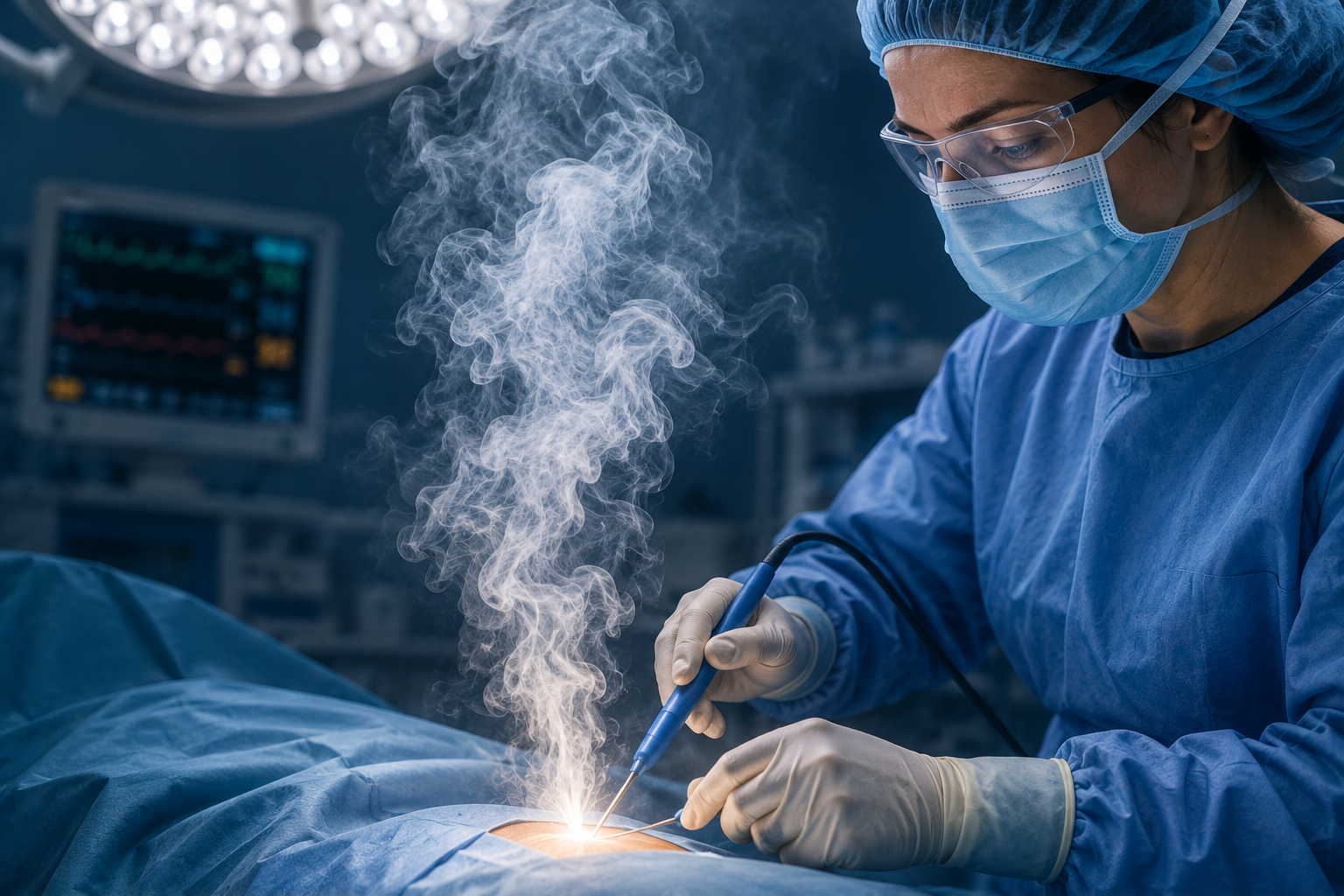
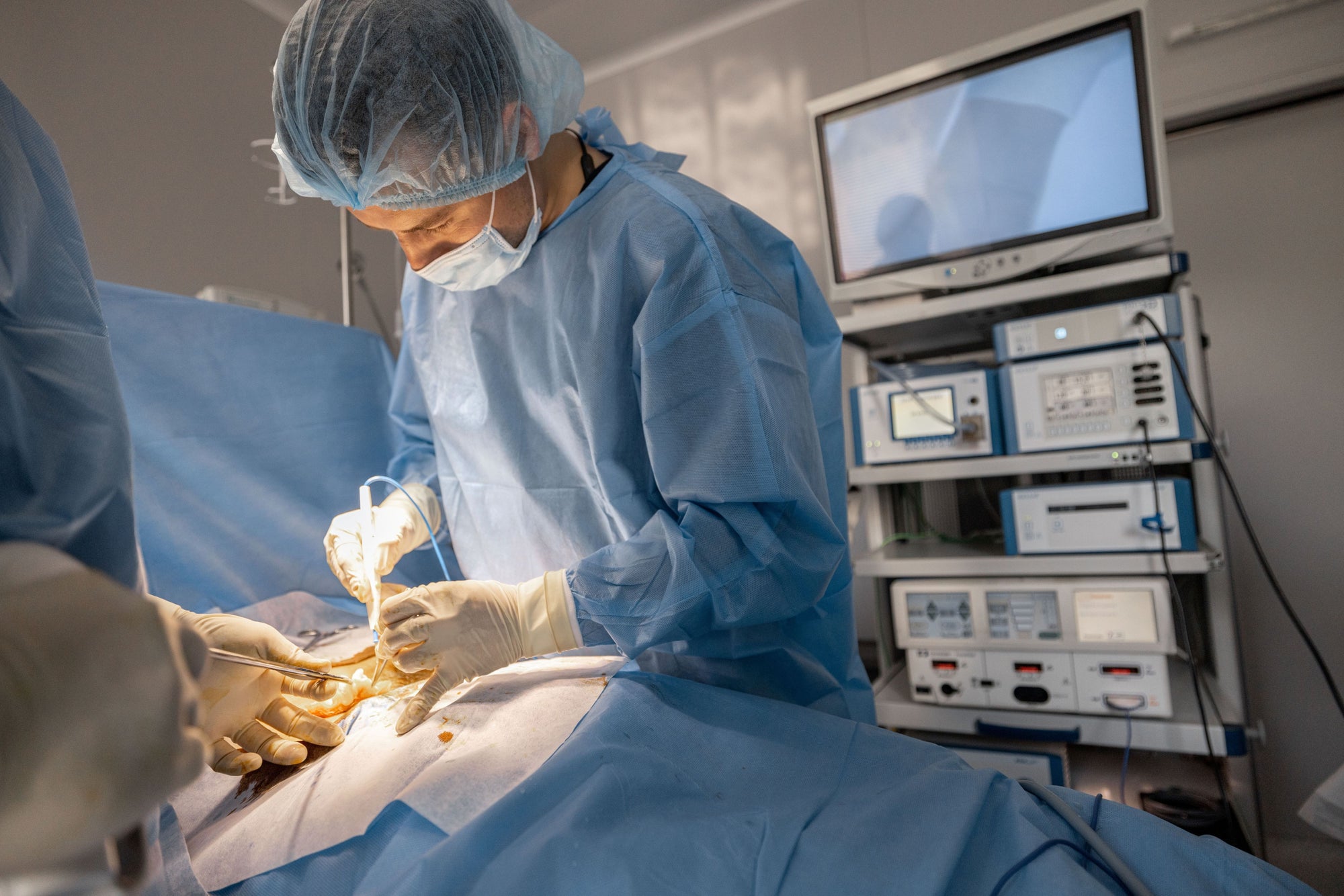
Every time tissue is cut, coagulated or vaporized during surgery, an aerosolized by-product is released into the air. It looks like a faint haze. Many operating teams have stopped noticing it. But surgical smoke is one of the most under-recognized occupational hazards in modern healthcare.
CIMPAX develops integrated smoke evacuation solutions that capture plume directly at the source, before it reaches the breathing zone of surgeons, nurses and anesthetists. Our pencils are full-featured electrosurgical instruments with smoke evacuation built in, paired with a powerful, ultra-quiet filtration system that fits seamlessly into any OR setup.
Why it matters
A single day in an unprotected OR exposes staff to airborne contamination comparable to 27 to 30 unfiltered cigarettes. Surgical plume contains over 150 hazardous chemicals, including benzene and formaldehyde, plus ultra-fine particles, viable bacteria and viruses. Perioperative nurses are documented to experience twice the rate of respiratory problems compared to the general population.
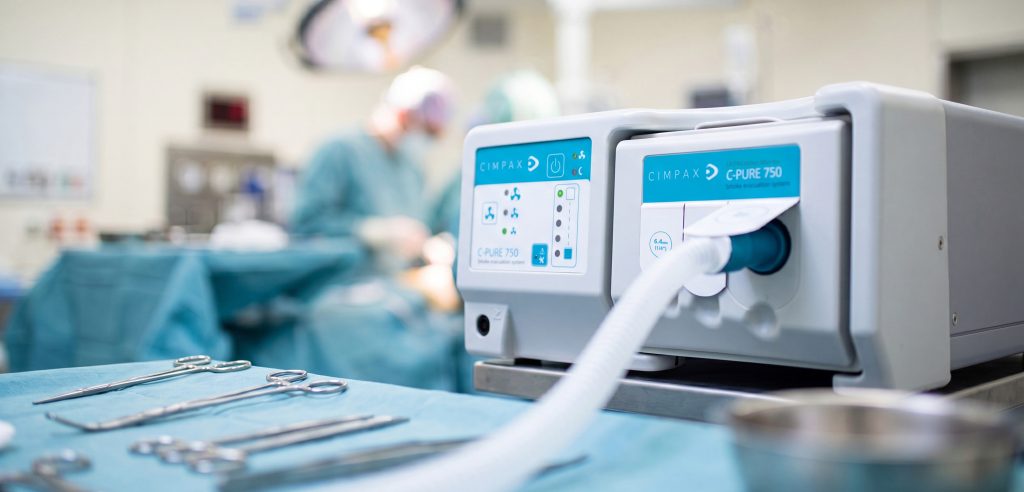
Our approach: capture, filter, integrate
Effective smoke evacuation depends on two things working together: capturing plume at the point of generation, and filtering it efficiently before it re-enters the room. CIMPAX combines both in one workflow:
- Integrated smoke evacuation pencils. Full electrosurgical pencils with capture built into the instrument tip, not added afterwards. The C-VAC range delivers cutting, coagulation and plume capture in a single device.
- Powerful filtration units. Compact, quiet and clinically validated, with multi-stage ULPA and carbon filtration.
The C-VAC pencils are the electrosurgery setup
The C-VAC pencils are not accessories to your electrosurgery setup. They are the electrosurgery setup, with smoke capture engineered in. This means OR teams can replace a standard electrosurgical pencil with a C-VAC pencil and gain integrated evacuation without changing workflow, training the team on new equipment, or adding instruments to the surgical field.
If you prefer to keep electrosurgery and smoke evacuation as separate instruments, the C-PURE 750 filtration unit pairs with any standard electrosurgical pencil through a separate evacuation hose.
Cimpax Smoke Evacuation Products


Choose your option


Surgical smoke
Walk into almost any operating room during electrosurgery, and you will see a faint haze drifting above the surgical field. It might look like steam. It is not.
Surgical smoke, sometimes called surgical plume, is the aerosolized by-product released whenever tissue is cut, coagulated or vaporized. It is produced by electrosurgical pencils, lasers, ultrasonic scalpels and a wide range of other thermal surgical devices. Over the course of a single working day, an unprotected operating team can inhale a remarkable volume of it.
For decades, this exposure was treated as an unavoidable part of the job. The evidence now tells a different story.
Surgical Smoke Hazards
Physical
Ultra-fine particulate matter that is small enough to penetrate deep into the lungs, bypassing the body's natural respiratory defenses and reaching the alveoli where gas exchange happens.
Chemical
Over 150 hazardous chemicals, including benzene and formaldehyde. Around 40 of them are known or suspected carcinogens, with a chemical profile that has been compared to cigarette smoke.
Biological
Viable bacteria and viruses, including documented transmission risks for human papillomavirus (HPV) and other infectious agents. The biological load is particularly high during procedures involving infected tissue.
What is surgical smoke made of?
Surgical smoke is roughly 95% water vapor. That sounds reassuring until you look at the remaining 5%, which is where the problem lives.
The hazardous fraction contains a complex mixture of physical, chemical and biological contaminants. A useful way to think about it is the framework many OR safety teams now use: the “PCBs” of surgical smoke.
How serious is the exposure?
27 to 30 cigarettes per day. A single day’s exposure to unfiltered surgical smoke has been estimated as equivalent to smoking 27 to 30 unfiltered cigarettes (Hill et al., 2012).
- 150 hazardous chemicals. Surgical smoke contains a chemical cocktail that includes benzene, formaldehyde, hydrogen cyanide and toluene (Barrett & Garber, 2003).
- 2× respiratory problems. Perioperative nurses have been shown to experience approximately twice the rate of many respiratory problems compared with the general population (Ball, 2012).
- HPV transmission documented. Active human papillomavirus has been recovered from surgical plume, and transmission to surgeons has been reported in the medical literature.
This is not theoretical exposure. It is the daily working environment for surgical teams worldwide.
Who is affected?
- Surgeons performing the procedure
- Anesthetists and anesthesia teams
- Scrub nurses and circulating nurses
- Surgical technologists and assistants
- Trainees and observing staff
- Patients, particularly during long procedures
Standard surgical masks provide very limited protection against the ultra-fine particles in surgical plume. Most masks are designed to block droplets and larger particulates, not the sub-micron material that dominates the hazardous fraction of smoke.
Why is this still happening?
Awareness of surgical smoke risks has grown significantly in the past decade, and several countries have introduced regulations or strong recommendations for smoke evacuation in operating rooms. Yet adoption is uneven, and many operating teams still work without effective evacuation.
The reasons are familiar: legacy practice, equipment cost concerns, the perception that smoke evacuation slows the workflow, and a simple cultural inertia that says, “we have always done it this way”.
The evidence base is no longer ambiguous. The question for hospitals and surgical teams is no longer whether to evacuate surgical smoke, but how to do it well.

What good smoke evacuation looks like
It depends on three things working together:
- Capture at the source. Smoke must be removed at the tip of the instrument, before it disperses into the room and the breathing zone of the team.
- Powerful, validated filtration. Multi-stage filtration with ULPA and carbon filters to trap particulates, chemicals and biological material before air is returned to the OR.
- Workflow that does not get in the way. If smoke evacuation slows the surgeon down or requires extra hands, it will not be used consistently. Integration matters.
This is what CIMPAX builds. Electrosurgical pencils with smoke evacuation integrated into a single instrument, paired with a compact, quiet and powerful filtration system that fits into any OR setup.